If you’re researching Recruitment Qualifications Australia, looking to start a career in recruitment, or already working in Talent Acquisition or a Recruitment Agency and wanting to build your skills and career opportunities, you’ve probably noticed something confusing:
There is currently no clear, nationally recognised pathway for Recruitment or Talent Acquisition qualifications in Australia.
Despite recruitment being a critical business function, Australia has historically relied on a mix of short recruitment courses, generic HR qualifications, and industry certifications — many of which are not specifically designed for modern Talent Acquisition professionals and are not nationally recognised VET qualifications.
This guide explains:
Before choosing a course, you need to be clear on one key distinction:
Are you a Recruiter or a Talent Acquisition professional? They are very different roles. Both often called “Recruiters” but very different in terms of actual jobs.
Although the terms are often used interchangeably, Recruitment and Talent Acquisition are very different career paths.
Agency recruiters typically work for recruitment agencies and focus on:
This environment is fast-paced, target-driven, and commercially focused.
Talent Acquisition professionals work internally within organisations and focus on:
TA is a strategic HR function aligned with organisational growth and culture.
One of the biggest problems in Australia’s training market is that many providers fail to clearly differentiate between agency recruitment and internal Talent Acquisition.
When researching recruitment qualifications, many people are directed toward:
While valuable for general HR careers, these qualifications contain only limited recruitment content — often just one introductory recruitment unit.
They are not specialist recruitment qualifications and usually do not provide the depth needed for a professional Talent Acquisition or recruitment career.
Here is a practical overview of the leading recruitment and Talent Acquisition training providers currently operating in Australia.
Here’s a practical overview of the key options currently available.
Hill Consulting HRS delivers practical, evidence-based recruitment and Talent Acquisition training tailored specifically to the Australian market.
Programs typically include:
Training formats include:
A major point of difference is the depth of real-world Talent Acquisition expertise, with more than 30 years of industry experience.
Key training areas include:
For organisations seeking practical, immediately applicable recruitment capability, Hill Consulting HRS is one of the strongest specialist providers in the Australian market.
The Recruitment Skills Academy provides specialist recruitment and hiring manager training focused on real-world application.
Programs are designed for:
Their approach focuses on:
Like Hill Consulting HRS, their strength lies in specialist recruitment expertise rather than generic HR training delivery.
Training options include:
RCSA is the peak body representing agency recruiters across Australia and New Zealand.
Its Recruitment Consulting Certificate is widely recognised within agency recruitment environments.
This certification is best suited to:
However, it is important to understand:
Deakin University offers a Graduate Certificate of Recruitment and Talent Acquisition developed in partnership with RCSA.
This postgraduate option is suited to:
Benefits include:
Considerations include:
Australian Institute of Management
AIM provides short recruitment and selection courses for managers and HR professionals.
These courses are generally:
Suitable for:
However, they are not formal recruitment qualifications and usually provide limited depth in modern Talent Acquisition strategy.
AHRI offers:
These programs support broader HR career development but are not specialist recruitment qualifications.
Recruitment typically forms only a small component of the overall qualification.
Monarch Institute delivers nationally recognised HR qualifications including:
Advantages include:
However, recruitment content remains limited and is not sufficient as a specialist Talent Acquisition pathway.
The Knowledge Academy offers introductory recruitment courses such as “Recruiting for Success.”
These courses are:
Useful for foundational awareness, but not highly tailored to Australian Talent Acquisition environments.
AIHR provides globally recognised online HR and recruitment certifications.
Benefits include:
However:
The best recruitment course depends on your career goals.
Consider specialist providers such as:
These providers focus specifically on Recruitment and Talent Acquisition capability.
RCSA certification is commonly recognised in agency recruitment environments and is often funded by employers.
A Certificate IV or Diploma in Human Resource Management may provide a strong HR foundation.
Suitable providers include:
The Deakin Graduate Certificate may suit professionals seeking senior HR or Talent Acquisition leadership pathways.
The future of Talent Acquisition qualifications in Australia is about to change significantly.

New nationally recognised qualifications are currently being developed for ASQA approval in 2026, including:
These qualifications are being developed by Rachel Hill and Craig Watson specifically for the modern Talent Acquisition profession.
The proposed qualifications aim to provide:
For the first time, Talent Acquisition may become recognised as a profession with its own dedicated qualification framework in Australia.
For many years, Recruitment and Talent Acquisition have been careers people “fell into” rather than professions supported by formal pathways.
That is now changing.
Australia is beginning to see stronger specialist providers, clearer career pathways, and the development of nationally recognised Talent Acquisition qualifications.
For professionals entering the industry — or organisations wanting to strengthen hiring capability — there has never been a better time to invest in recruitment and Talent Acquisition training.
For more information, course comparisons, and updates on the proposed 2026 Talent Acquisition qualifications, connect via LinkedIn: Rachel Hill on LinkedIn
Every week it seems a new platform pop up promising to transform the way organisations find and hire talent. AI will screen CVs faster. It will rank candidates automatically. It will optimise job advertisements and identify passive talent. It can screen candidates via testing and videos, or record your interview notes.
For many in Talent Acquisition, it raises the obvious question.
What does AI mean for me? Will it take my job?
It’s a subject close to my hear and something I have been talking about for the last two years. The pace of change (and new products) is phenomenal. I’ve been in recruitment 28 years, and seen a lot of changes but not as fast or as impactful as AI.
The reality is that AI is already influencing recruitment in ways many people don’t fully realise
For many organisations, AI isn’t something coming in the future. It’s already embedded in the technology recruiters use every day. Probably within your ATS and or within the Seek or LinkedIn candidate ranking features. Or how and where it distributes your adverts to potential online applicants via social media platforms.
AI is already built into:
These technologies can certainly help reduce manual tasks and so time to hire and improve efficiency across the entire recruitment process.
However, AI tools also raise some very important questions.
Understanding these fundamental issues is becoming an important capability for HRD’s and modern Talent Acquisition professionals.
Check out our AI Governance Check List. Plus have a policy on AI Usage in Recruitment
There is much speculation that Artificial Intelligence will eventually replace recruiters. Indeed, it can certainly replace some of the low level, mundane, repetitive tasks. In reality though, what we are seeing in organisations is quite different.
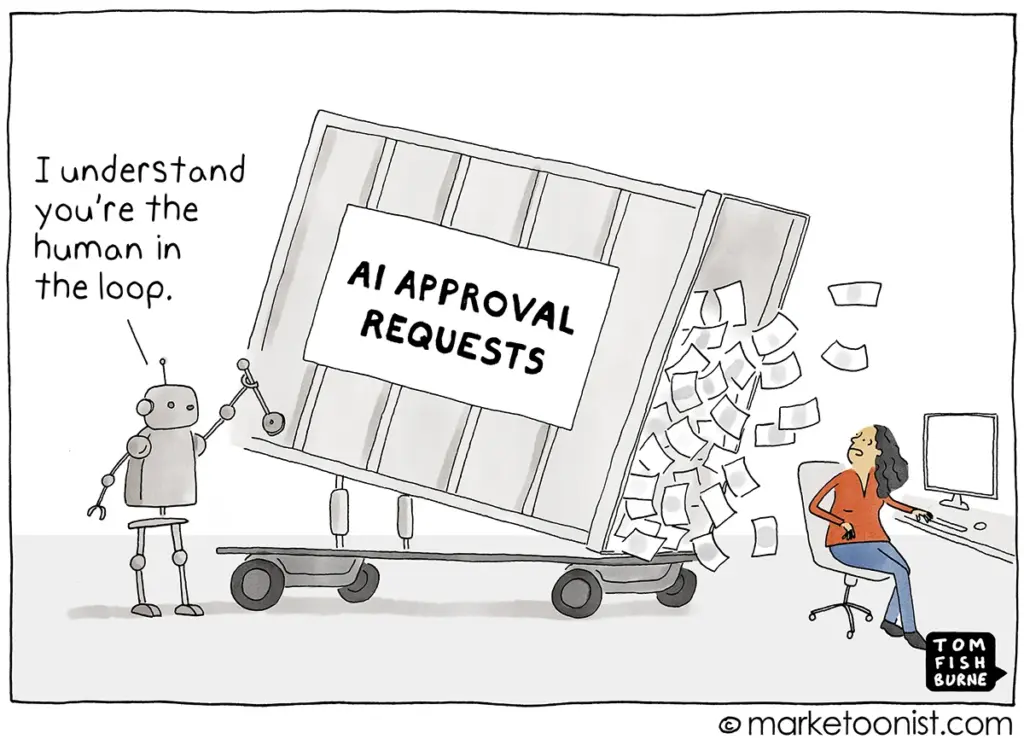
Recruitment has always been about much more than processing information or admin.
Successful hiring requires judgement, relationship building, stakeholder management, communication and cultural understanding and “organisational fit”. It also involves ethical decision-making. Are your practices free from Bias? Is the AI tool free from Bias? Where can bias or faults in the process be “baked into the system”.
These are areas where human recruiters remain essential.
What AI can do is remove some of the grunt work – the operational workload that often dominates a recruiter’s day. Which allows recruiters to focus more on the strategic and human touch aspects of hiring.
As I have always said
“Automate the mundane and add value on the human touch”
As AI becomes more integrated into recruitment technology, the role of the recruiter is evolving.
Recruiters don’t need to become technical experts. But they do need to become informed users of recruitment technology. This means understanding – What tools are out there, how the AI tool works and how their recommendations should be interpreted. Coupled with other “non-AI” factors.
It also means recognising when automated recommendations should be questioned rather than accepted without review.
If AI systems rely on historical hiring data, they can unintentionally reproduce existing patterns or biases. Recruiters need to understand how to use these tools responsibly and ensure recruitment processes remain fair and inclusive. And that the creators of these tools can check and audit for bias in the machine.
There is something called Whitebox and Black box thinking, when it comes to checking the bias. And also, a new set of global code of ethics for the use of AI in Recruitment. (Want to find out more? Come on our TA Fundamentals - session 2, it's all about AI in recruitment).
What about candidate experience?
Used effectively, AI can improve communication with candidates, reduce delays and create more transparency in the recruitment process. But if poorly implemented, it can make the hiring process feel impersonal and frustrating.
Ultimately, the value of AI depends on the tools used and how recruiters choose to use it.
However, one of the biggest risks in Recruitment is probably not using AI at all.
On a recent training course I ran about 80% of participants were still not using AI tools or afraid to implement. With a wait and see attitude.
It’s understandable that many Talent Acquisition professionals feel uncertain about the rapid rise of AI in recruitment. Or what tools to pick, or where to use in the process. New technology often creates concern before people have the opportunity to understand how it can be used effectively. Think people were once afraid to cross the Sydney Harbour bridge that it wouldn’t hold the weight of people and traffic!
The recruiters who will thrive (or survive) in the coming years will be the ones use AI. Especially the ones who learn how to use it intelligently.
Three key understandings are needed:
1. Really understand the tool you are buying / using. Do you truly understand how it ranks, sorts, screens candidates (ask about the algorithms or tools it uses in the background. Ask the right questions at the demo and don’t assume. (I’ve seen some shockers)
2. Know - what tools are out there and where you would use them in the process (there are so many) but good to get your head around your process steps and just where they could fit in. e.g. you may use four to five different “AI tools” in your hiring process for maximum efficiency and candidate care.
3. Question the fairness and transparency in hiring decisions. Test for bias in the machine. You will need to combine technology with strong recruitment fundamentals and focus time on the areas of recruitment that require human expertise.
In other words, they become AI-enabled recruiters, not recruiters replaced by AI.
The future of recruitment will be a partnership between technology and human expertise.
AI provides:
People provide:
Organisations that balance both will build stronger, more effective hiring processes.
AI is changing recruitment—but technology alone doesn’t create great hiring decisions.
If you want to strengthen your recruitment capability and understand how modern tools including AI fit into today’s hiring landscape, consider attending our TA Fundamentals Program for TA/HR Professionals - Session Two.
This practical masterclass series explores:
• AI in Recruitment
• Best Recruitment Tools
• AI policies and frameworks for HR compliance
• Attraction and Branding techniques
• Career Websites
• AI risks and mitigation plans
???? Explore upcoming sessions and register
If you’d like some more useful tips and check out our AI resources and or come on one of our TA Fundamentals training programs.
Resources include:
Want a Recruitment Health Check? Get in touch or check out our new Hiring Risk Check List tool.
If you’ve “fallen” into recruitment, now’s the time to take control. That’s why we’ve created out TA Fundamentals Collection - two practical, half-day online programs designed to help you formalise your skills and future-proof your talent strategy:
Both sessions are interactive, practical, and tailored for TA and HR professionals who want to transform recruitment from an accidental career into a strategic advantage.
Each session delivers valuable, actionable insights on its own. For those looking to deepen their Talent Acquisition expertise even further, combining both sessions creates a well-rounded learning pathway—covering technology, branding, candidate experience, and inclusive hiring practices.
Find out more about our TA Fundamentals Training Sessions on our Eventbrite page
Modern recruitment isn’t just about filling vacancies—it’s about building a competitive advantage. When teams understand and apply contemporary Talent Acquisition strategies, the impact goes far beyond hiring:
Bottom line: Investing in your people means investing in your ability to compete for talent in a diverse, digital-first world. Organisations that prioritise modern recruitment strategies position themselves as employers of choice—ready to attract, engage, and retain the best talent in an increasingly competitive landscape.
Recruitment may not be a career you planned for, but it’s one that can be highly rewarding, transform your professional life—and the lives of countless others. If you “fell into” recruitment, now’s the time to take control, formalise your skills, and become the professional and trusted business partner your meant to be.
Find out more about our TA Fundamentals Training Sessions on our Eventbrite page
When Emily landed her first recruitment role, she thought it would be simple—write a job ad, interview a few candidates, and make a hire. Easy, right?
But within weeks, reality felt very different.
Emily quickly realised recruitment was more complex than she imagined.
“I honestly felt out of my depth at the start,” Emily admits. “I wanted to do a great job, but most of the time I felt like I was winging it.”
If you’ve ever felt the same, you’re not alone.
Recognising she needed support, Emily enrolled in our Talent Acquisition Fundamentals Training.
The online workshop is capped at just 15 participants and designed to be interactive and practical. That meant Emily wasn’t just listening to theory—she was practicing, discussing, and applying the skills straight away.
This hands-on approach was the turning point in her confidence.
This is exactly why focusing on recruitment skills for new recruiters is so important. By the end of the training, Emily noticed a real shift in how she approached her role.
“Now I feel like a real recruiter,” Emily says. “Instead of reacting and scrambling, I’m confident, organised, and even excited about what’s ahead.”
Our Talent Acquisition Fundamentals Training delivers recruitment skills for new recruiters, perfect for:
If you’ve ever dreaded a job brief, worried about compliance, or struggled with interviews, this program will give you the tools and confidence to succeed.
Emily’s story shows how quickly things can change with the right foundation. What once felt intimidating is now exciting and manageable.
You can build the same confidence.
Check out our Eventbrite page for our next TA Fundamentals training dates and prices.
Or feel free to get in touch to find out when the next course is running.
When Trevor Vas reflected on Kevin Wheeler’s keynote, “When Bots Hire Better Than You,” one thing stood out: the unease in the room.
“There was a clear sense of discomfort,” Trevor said. “For many, it felt like the ground was shifting, and their careers—as they understood them—were coming to an end.”
AI in recruitment is changing. From smart sourcing tools to automated interview scheduling and skill-matching algorithms, machines are now doing tasks once handled by recruiters — often faster, sometimes with better results.
But this isn’t the end of Talent Acquisition as we know it.
In fact, Trevor sees it as the beginning of a smarter, more strategic future for TA professionals.
The real breakthrough, Trevor says, isn’t about replacing recruiters — it’s about rethinking their role.
“The biggest breakthrough wasn’t about tools or metrics,” he explains. “It was creating strategy that gave people their agency back.”
In other words, when recruiters stop trying to compete with bots on speed or data crunching and instead lean into strategy, insight, and relationship-building — that’s where their true value lies.
By thinking like strategists, TA professionals move from being order-takers to decision-makers. They start driving conversations about workforce planning, skills needs, and future talent — instead of just reacting to requisitions.
At Hill Consulting HRS, we work closely with organisations to help their TA teams make this shift — from transactional recruiters to trusted Talent Advisors.
This means:
We don’t resist automation. We embrace it — smartly. The goal isn’t to beat the bots. It’s to let them do what they’re good at, so people can focus on what only people can do: build trust, understand nuance, create connections, and shape culture.
If you’re a TA leader or HR professional feeling uneasy about AI, you’re not alone. The key is to start exploring, not retreating.
Think of it like this: automation may change your tools, but strategy changes your future.
And if you want support navigating that future, we’re here to help. Explore our HR Tech services to see how we support TA teams in adapting to new tech, new expectations, and a more strategic way of working.
Read Trevor Vas’s full post on this shift in TA here
Check out Kevin Wheeler’s piece on Toxic vs Healthy Algorithms in Recruiting
